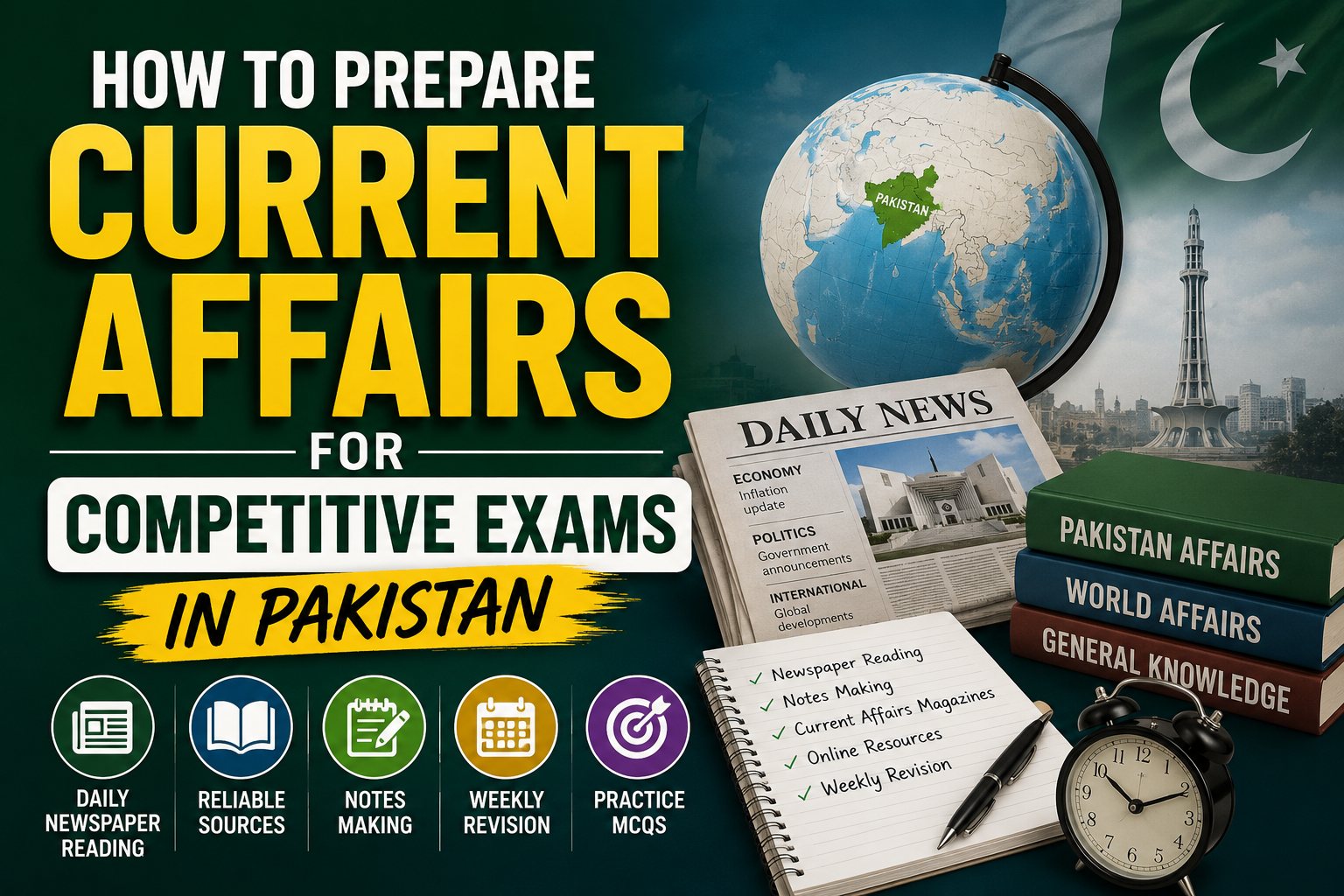
How to Prepare Current Affairs for Competitive Exams in Pakistan
Every year, hundreds of thousands of students in Pakistan sit for competitive exams like PPSC, FPSC, CSS, and NTS. One topic that worries most candidates is current affairs. Many students either skip it completely or start reading it just a few days before the exam. Both choices hurt their final score.
The good news is that current affairs is one of the easiest sections to score high in, if you prepare it the right way. MCQsDrive is a free online platform that helps Pakistani students practice current affairs MCQs, general knowledge, and over 20 other subjects, all in one place. Thousands of exam aspirants across Pakistan use MCQsDrive daily to sharpen their knowledge and improve their exam performance.
In this complete guide, you will learn easy, practical, and proven steps to prepare current affairs for any government job exam in Pakistan. Whether you are preparing for your first exam or your fifth attempt, this guide will help you study smarter and score better.
What Are Current Affairs and Why Do They Matter in Competitive Exams in Pakistan?
Current affairs means recent news and important events from Pakistan and around the world. These events cover a wide range of topics such as politics, economy, sports, science, international relations, and social developments.
In major Pakistani competitive exams, current affairs carry a significant portion of the total marks. In some PPSC and FPSC papers, current affairs alone account for 20 to 30 percent of all questions. CSS candidates also face a full dedicated paper on current affairs and Pakistan affairs.
Examiners use this section to test whether candidates are aware of what is happening around them. A student who reads the news regularly and practices related MCQs will always perform better than someone who only focuses on textbook subjects.
How Many Months of Current Affairs Should You Study for PPSC, FPSC, CSS, and NTS Exams?
This is one of the first questions every serious exam candidate asks. The right answer depends on which exam you are targeting.
For PPSC Exams
For Punjab Public Service Commission tests, studying at least the last 6 months of current affairs is usually enough. Focus more on Pakistan-related events, government policies, and provincial news.
For FPSC and CSS Exams
The Federal Public Service Commission and the CSS exam demand a deeper understanding of both national and international events. You should cover at least 12 months of current affairs for these exams. International organizations, global summits, and Pakistan’s foreign relations are tested regularly.
For NTS Tests
NTS assessments usually focus on the last 3 to 6 months of current affairs. Since NTS questions are MCQ-based, regular online practice is the most effective preparation strategy.
What Are the Best Sources for Current Affairs Preparation in Pakistan?
Picking the right study sources saves you a lot of time and prevents confusion. Many students make the mistake of jumping between too many books and websites. Focus on a few trusted sources and stick to them.
Daily Newspapers
Reading a Pakistani newspaper daily is the most powerful habit you can build during exam preparation. Dawn, The News, and Express Tribune are the top English-language newspapers. Set aside 30 minutes every morning to read headlines, editorials, and important national and international news stories.
Monthly Current Affairs Magazines
Several Pakistani publishers release monthly current affairs magazines that summarize important events in an easy-to-read format. Many of these magazines also include practice MCQs at the end of each chapter, which makes revision much more effective.
Online MCQ Practice Platforms
Practicing current affairs MCQs online is one of the smartest study methods available today. Online platforms let you test your knowledge instantly and identify the areas where you need more work. MCQsDrive offers both Pakistan current affairs and international current affairs MCQs, all free of cost. The platform covers topics that directly appear in PPSC, FPSC, CSS, and NTS exams.
How Should You Build a Daily Study Plan for Current Affairs?
A consistent daily routine is more valuable than long study sessions done once a week. Here is a simple and effective plan you can start following today.
In the morning, spend 30 minutes reading one newspaper. Pay attention to the main stories, especially those related to Pakistan’s government, economy, and international affairs. In the afternoon or after your regular study, take 15 minutes to write short notes on what you read. Write down key names, dates, places, and facts in your own words.
In the evening, practice 20 to 30 current affairs MCQs on an online platform. This reinforces what you studied during the day and helps you identify any knowledge gaps. On weekends, use one hour for a full weekly revision of all your notes and revisit any MCQs you answered incorrectly during the week.
Which Current Affairs Topics Are Most Important for Competitive Exams?
Not every news story carries equal weight in competitive exams. Knowing the high-priority topics helps you study smarter.
Pakistan National Affairs
Government policies, budget updates, constitutional amendments, CPEC developments, national awards, and major court decisions are very commonly tested. These topics appear in almost every PPSC and FPSC paper.
International Affairs and Foreign Relations
The United Nations, OIC, SCO, NATO, and other international organizations appear frequently in CSS and FPSC papers. Pakistan’s diplomatic relations with China, the US, India, Afghanistan, and other countries are also important.
Science, Technology, and Environment
Recent space missions, tech innovations, climate agreements, and Pakistan’s achievements in science are tested in NTS and general knowledge sections.
Sports and Cultural Events
Major cricket tournaments, Pakistan’s performance in international games, Nobel Prize announcements, and national cultural events are also part of current affairs. These are easy marks if you stay updated.
How Can You Remember Current Affairs for a Long Time Without Forgetting?
Forgetting is the most frustrating part of current affairs study. You read something today and forget it by next week. Here are the most effective memory techniques to fix this problem.
Write notes in your own words after every study session. When you rephrase information yourself, your brain stores it much more effectively than just reading it passively. Use flashcards for quick revision of names, dates, and facts. Spend just five minutes every morning reviewing your flashcards, and you will notice a big improvement in your retention.
Group related events together in your notes. For example, keep all international summit notes in one section and all Pakistan economic news in another. This organized structure makes revision faster and less stressful.
Test yourself regularly by attempting MCQs. Answering questions forces your brain to recall information in an active way, which creates stronger memory links than passive reading.
What Is the Role of MCQ Practice in Scoring High in Current Affairs?
MCQ practice is not just about testing what you know. It is one of the most effective learning tools in competitive exam preparation. When you answer a current affairs MCQ and get it wrong, you immediately feel curious about the correct answer. That curiosity makes you remember the right information much longer.
Practicing MCQs also helps you understand how questions are structured in real exams. You learn what kind of details examiners focus on and how they phrase tricky questions. This knowledge builds your exam confidence and reduces anxiety on test day.
Platforms that provide solved MCQs with explanations are especially useful. They help you understand the reason behind each correct answer, not just what that answer is. This deeper understanding improves your overall performance across all sections of the exam.
How Do You Prepare International Current Affairs for CSS and FPSC Exams?
International current affairs can feel like a huge topic because there is so much happening in the world every day. The smart approach is to filter and focus on what matters most for Pakistani competitive exams.
Track major decisions by global organizations like the United Nations, World Bank, IMF, WHO, SCO, and OIC. These bodies are mentioned in exam questions very frequently. Follow Pakistan’s foreign policy and its relationships with major countries including China, the US, Saudi Arabia, and neighboring states.
Keep a separate notebook or digital file for international current affairs. Organize your notes by region or organization. This structure makes it very easy to revise before the exam. Also follow major global agreements on climate, trade, and peace, as these topics appear regularly in CSS papers.
What Are the Most Common Mistakes Students Make in Current Affairs Preparation?
Understanding what not to do is just as important as knowing what to do. These are the most common errors that hurt students’ scores in current affairs.
Starting too late is the biggest mistake. Many students only begin reading current affairs two or three weeks before the exam. This is not nearly enough time to absorb months of important news. Start your current affairs preparation at least 3 to 6 months before your exam date.
Using too many sources creates confusion. Switching between multiple newspapers, magazines, and websites without a clear plan wastes time and leads to information overload. Pick two reliable sources and follow them consistently.
Only reading without practicing MCQs is another major mistake. Passive reading does not prepare you for the active recall required in an exam. Always combine reading with MCQ practice for a more complete and result-driven preparation.
Skipping weekly revision is also very common. Even if you study something thoroughly, you will forget it without regular review. Block time every week specifically for revision to keep your knowledge fresh and accessible.
How Does Online MCQ Practice Help You Boost Your Current Affairs Score?
Online practice platforms have transformed competitive exam preparation in Pakistan. Students no longer need to rely only on printed books and classroom coaching. With a smartphone and internet access, you can prepare anytime and anywhere.
When you practice current affairs MCQs online, you get instant results. You know immediately which topics need more attention. This real-time feedback makes your study sessions more focused and productive. You stop wasting time on topics you already know well and concentrate on areas that need improvement.
Online platforms also let you take timed quizzes, which builds your speed and accuracy for the actual exam. Practicing under a time limit trains your brain to think and respond quickly, which is exactly what you need when you sit for a paper with hundreds of questions and limited time.
MCQsDrive provides a free quiz mode with hundreds of current affairs MCQs covering both Pakistan and international topics. The platform is regularly updated and covers all the key areas tested in PPSC, FPSC, CSS, and NTS exams. Using MCQsDrive as part of your daily routine is one of the best decisions you can make for your exam preparation journey.
Conclusion
Preparing current affairs for competitive exams in Pakistan becomes much easier when you follow a clear and consistent plan. Read one trusted newspaper every morning, take short notes, revise your notes every week, and practice MCQs daily. Focus your energy on high-priority topics like Pakistan national affairs, international organizations, science, and sports.
Do not wait for the last minute. Start today, stay consistent, and track your progress. Use reliable and free resources like MCQsDrive to practice thousands of current affairs MCQs and strengthen your exam readiness every single day. With the right strategy and daily effort, you can score high in current affairs and move one step closer to landing your dream government job in Pakistan.
FAQs:
Q1. How many months of current affairs should I study for PPSC?
You should study at least the last 6 months of current affairs for PPSC exams. Focus on Pakistan national news, government decisions, and economic updates.
Q2. What is the best newspaper to read for competitive exam preparation in Pakistan?
Dawn and The News are the most recommended English-language newspapers for exam preparation. Express Tribune is also a reliable option for daily current affairs reading.
Q3. Can I prepare current affairs without reading a newspaper every day?
Yes, you can use monthly current affairs magazines and trusted online MCQ platforms. However, reading a newspaper daily remains the most consistent and reliable method to stay updated.
Q4. How do I stop forgetting current affairs before the exam?
Write short notes in your own words, use flashcards, organize your notes by topic, and practice MCQs regularly. Weekly revision is the most important habit to build for long-term retention.
Q5. Which current affairs topics are most important for CSS?
For CSS, focus on Pakistan’s foreign policy, constitutional developments, international organizations, global economic news, and major geopolitical events. Pakistan affairs and international affairs are both tested in detail.