General Knowledge MCQs with Answers for Competitive Exam Preparation
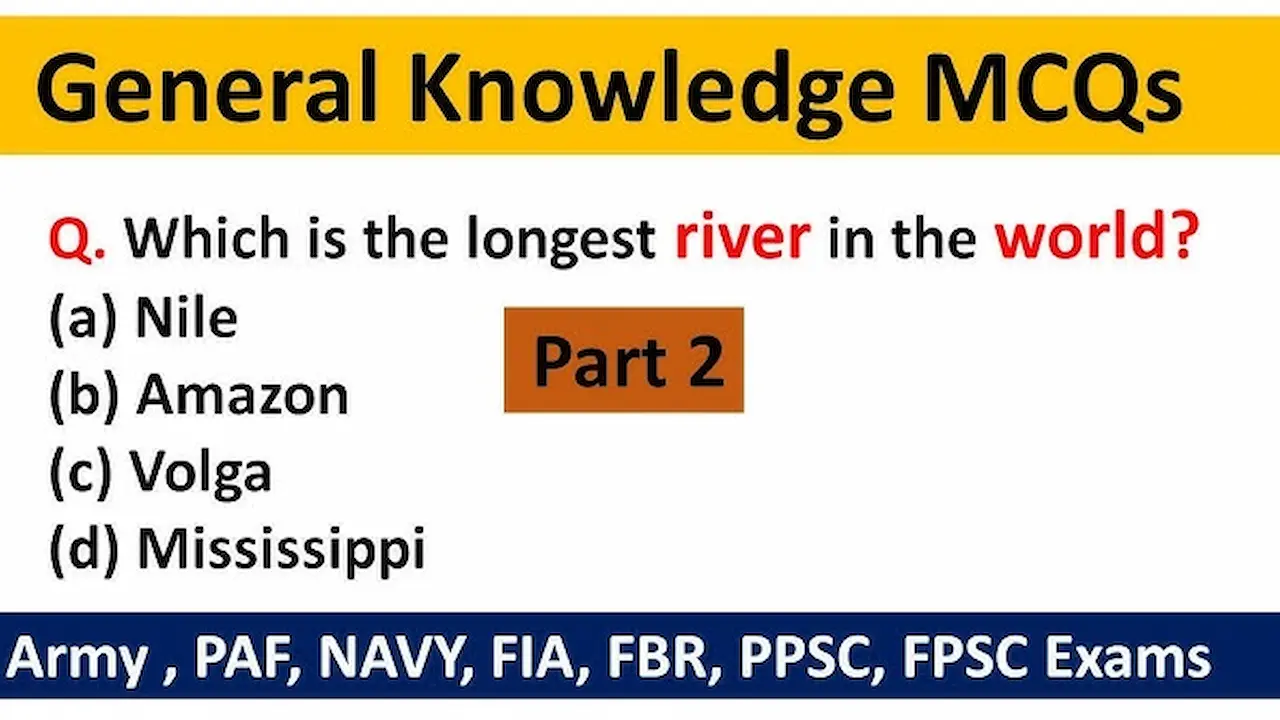
General knowledge is one of the most important sections in competitive exams. Whether you are preparing for PPSC, FPSC, CSS, NTS, PMS, police recruitment tests, or university admission exams, you are likely to face questions from history, geography, science, world affairs, Pakistan studies, and everyday knowledge.
The challenge is not simply to memorize facts. You need to practice the right questions, understand common exam patterns, and revise regularly. This guide brings together useful general knowledge MCQs with answers and practical preparation tips.
For topic-wise practice, visit the General Knowledge MCQs section on MCQsDrive.
Why General Knowledge MCQs Matter in Competitive Exams
General knowledge questions test awareness, memory, observation, and the ability to connect information from different subjects.
In many one-paper examinations, general knowledge forms a major part of the test. A candidate may be asked about a country’s capital in one question and a scientific invention in the next. This wide scope makes the section difficult for students who depend on last-minute preparation.
Regular MCQ practice helps you recognize repeated facts and familiar question styles. It also improves speed, which is essential when you have less than a minute for each question.
Important Areas Covered in General Knowledge
General knowledge is broad, but most exam questions come from a few recurring areas. A balanced plan should include all of them.
Pakistan Studies and National Information
This area covers important personalities, constitutional history, geography, national symbols, rivers, dams, provinces, and major events in Pakistan’s history.
World Geography and International Facts
Candidates should know capitals, currencies, continents, oceans, mountain ranges, deserts, famous rivers, international borders, and major organizations. Map-based learning can make these facts easier to remember.
Everyday Science and Inventions
This section includes the human body, basic physics, chemistry, biology, scientific instruments, discoveries, units of measurement, and famous inventors.
History, Literature, and Famous Personalities
Important wars, civilizations, books, authors, political leaders, scientists, and Nobel Prize winners are common topics. Connect each person with a work, event, or achievement rather than memorizing an isolated name.
Practice General Knowledge MCQs with Answers
The following general knowledge questions cover Pakistan, world geography, science, history, and famous personalities. Attempt each question before checking the correct answer.
Pakistan and World General Knowledge MCQs
- What is the capital of Australia?
A) Sydney
B) Melbourne
C) Canberra
D) Perth
Answer: C) Canberra - Which is the largest continent by area?
A) Africa
B) Asia
C) Europe
D) North America
Answer: B) Asia - What is the national language of Pakistan?
A) Punjabi
B) Urdu
C) Sindhi
D) English
Answer: B) Urdu - Which is the longest river in Pakistan?
A) Ravi
B) Chenab
C) Jhelum
D) Indus
Answer: D) Indus - The United Nations was established in which year?
A) 1919
B) 1939
C) 1945
D) 1950
Answer: C) 1945 - Which country is known as the Land of the Rising Sun?
A) China
B) Japan
C) Thailand
D) South Korea
Answer: B) Japan - What is the currency of Saudi Arabia?
A) Dinar
B) Dirham
C) Riyal
D) Pound
Answer: C) Riyal - Which is the largest ocean in the world?
A) Atlantic Ocean
B) Indian Ocean
C) Arctic Ocean
D) Pacific Ocean
Answer: D) Pacific Ocean
General Science MCQs with Correct Answers
Science questions in general knowledge papers are usually short and concept-based. Focus on basic facts that can be recalled quickly.
- Which gas is essential for human respiration?
A) Nitrogen
B) Oxygen
C) Hydrogen
D) Carbon dioxide
Answer: B) Oxygen - What is the chemical symbol for gold?
A) Ag
B) Gd
C) Au
D) Go
Answer: C) Au - Which planet is called the Red Planet?
A) Venus
B) Jupiter
C) Mars
D) Mercury
Answer: C) Mars - What is the largest organ in the human body?
A) Liver
B) Brain
C) Heart
D) Skin
Answer: D) Skin - Which instrument measures atmospheric pressure?
A) Thermometer
B) Barometer
C) Hygrometer
D) Altimeter
Answer: B) Barometer - Which vitamin is mainly produced when skin is exposed to sunlight?
A) Vitamin A
B) Vitamin B12
C) Vitamin C
D) Vitamin D
Answer: D) Vitamin D
History and Famous Personalities MCQs
History becomes easier when you study events in chronological order. Timelines, short notes, and repeated revision are more useful than reading long chapters without testing yourself.
- Who was the first Governor-General of Pakistan?
A) Liaquat Ali Khan
B) Muhammad Ali Jinnah
C) Khawaja Nazimuddin
D) Iskander Mirza
Answer: B) Muhammad Ali Jinnah - Who wrote the play “Hamlet”?
A) Charles Dickens
B) William Shakespeare
C) John Milton
D) George Bernard Shaw
Answer: B) William Shakespeare - The ancient pyramids are most closely linked with which civilization?
A) Roman
B) Greek
C) Egyptian
D) Indus Valley
Answer: C) Egyptian - Who discovered penicillin?
A) Louis Pasteur
B) Alexander Fleming
C) Edward Jenner
D) Robert Koch
Answer: B) Alexander Fleming - Which Mughal emperor built the Taj Mahal?
A) Akbar
B) Babur
C) Aurangzeb
D) Shah Jahan
Answer: D) Shah Jahan
How to Prepare General Knowledge MCQs Effectively
A clear strategy is more valuable than random reading. Divide the syllabus into small topics and assign a fixed time to each one. For example, study world geography on Monday, Pakistan studies on Tuesday, everyday science on Wednesday, and current affairs on Thursday.
After studying a topic, solve 30 to 50 MCQs. Mark every incorrect answer and write a one-line explanation in a notebook or digital file. This error list will become one of your most useful revision resources.
Use active recall instead of repeatedly reading the same notes. Close the book and answer questions from memory. Review difficult facts after one day, one week, and one month. This spaced revision method helps move information from short-term memory to long-term memory.
MCQsDrive supports this routine through subject-wise questions and exam-focused practice. Explore the MCQsDrive learning platform to move between subjects and build a consistent study schedule.
Common Mistakes Students Should Avoid
Many candidates collect too much material and revise too little. Multiple books, PDF files, and social media pages can create confusion instead of progress. Choose a limited number of reliable sources and return to them regularly.
Another mistake is ignoring wrong answers. A low practice score is useful when it shows where your knowledge is weak. Read the explanation, understand the fact, and attempt questions from the same topic again.
Do not focus only on static general knowledge. Competitive exams often include recent national and international developments. Keep a separate current-affairs notebook and update it weekly.
Avoid blind guessing during practice. First eliminate clearly incorrect options, then choose between the remaining possibilities. This habit can improve accuracy when you are working under exam pressure.
Why Practice on MCQsDrive
MCQsDrive is built for candidates who want organized and accessible exam preparation. Instead of searching through scattered notes, users can explore subject-based MCQs, revise important facts, and build confidence through regular practice.
The platform is useful for beginners and experienced candidates preparing for PPSC, FPSC, CSS, NTS, PMS, and other competitive examinations. Its topic-wise structure makes it easier to identify weak areas and plan revision according to your exam syllabus.
Consistent practice on MCQsDrive can help you improve question-solving speed, strengthen factual knowledge, and become familiar with the format commonly used in competitive examinations.
You can also learn more about MCQsDrive and its focused approach to question practice.
Final Thoughts
General knowledge cannot be mastered in a single day, but it becomes manageable with consistency. Focus on high-frequency topics, solve questions daily, revise mistakes, and keep your current-affairs knowledge updated.
The MCQs above are a starting point. Track your accuracy and review difficult questions regularly. A small routine of 20 to 30 questions a day can produce a noticeable improvement within a few weeks.
Continue practicing with general knowledge questions and answers on MCQsDrive and turn daily revision into an exam-day advantage.